Navigating Complex Infrastructure and Community Issues
Major infrastructure projects require more than technical expertise. They also require an understanding of government, community concerns, public opinion, the media, and the stakeholders who can influence whether a project moves forward. These projects illustrate Mark Grossman’s experience helping major corporations navigate those challenges.
Invenergy retained Mark Grossman to help navigate community and government concerns surrounding Shoreham Solar Commons, a 24.9-megawatt solar facility in Brookhaven.
The outreach effort included neighborhood engagement, meetings with public officials and local institutions, media briefings, and project changes responding to community concerns, including extensive landscaping and screening.
The project moved forward and entered commercial operation in 2018.
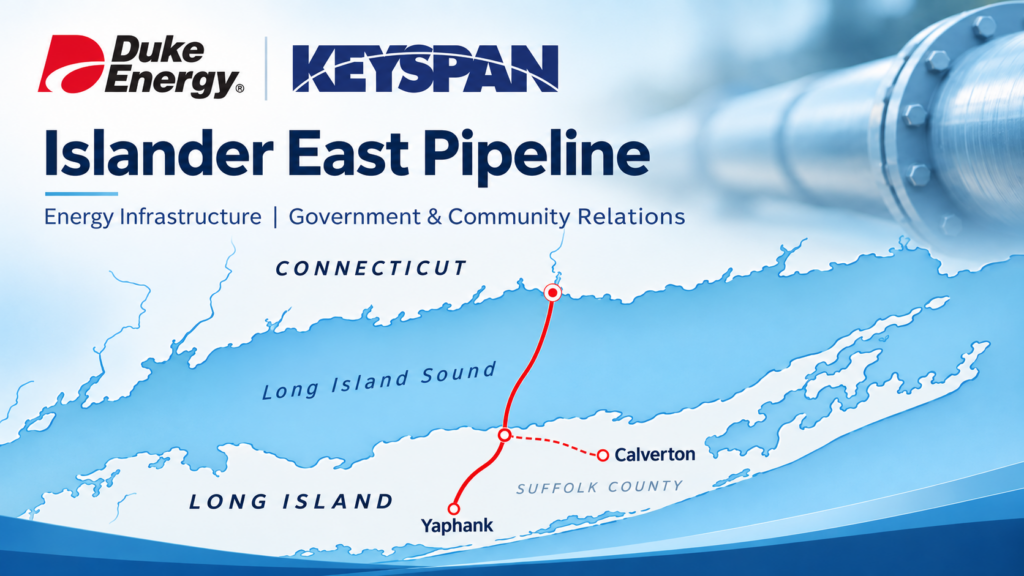
Mark Grossman was retained to provide Long Island public and government relations counsel for Islander East, a proposed interstate natural gas pipeline developed by Duke Energy and KeySpan.
His work included stakeholder mapping, meetings with elected officials and civic leaders, community outreach, media relations, and engagement with environmental organizations concerned about the proposed route through sensitive areas of the Long Island Pine Barrens.
The Long Island portion of the project successfully addressed key governmental, environmental, and community issues. The overall pipeline was ultimately halted because of regulatory obstacles on the Connecticut side of Long Island Sound.
Representing major wireless companies including AT&T Wireless and Sprint PCS, Mark Grossman helped navigate the challenge of expanding cellular service in communities that wanted better coverage but frequently resisted new towers and antennas.
Working with municipal officials and local decision-makers, Grossman helped develop site-specific solutions including co-location on existing towers, use of municipal and public-safety facilities, rooftop installations, and towers designed to resemble flagpoles or trees.
The work demonstrated how negotiation, creative siting, and responsiveness to local concerns can help essential infrastructure move forward while reducing its impact on host communities.
We use cookies to ensure that we give you the best experience on our website. If you continue to use this site we will assume that you are happy with it.